Carbon Copy
As Nepal rebuilds, a climate-vulnerable nation tests the world’s response
On 26 August, an avalanche of ice, rock, water and debris, triggered by a glacial break-off, gushed downstream at a speed of almost 50 metres per second, tearing through Nepal’s Rasuwa and Nuwakot districts and impacting communities almost 100 km away. It claimed almost 1,400 lives, with more than 5,000 still missing, as authorities continue search operations.
The disaster was not simply the result of a single extreme weather event. A synthesis by World Weather Attribution scientists and international glaciologists found that a combination of geological and climatic factors contributed to the catastrophic rock and ice collapse, with decades of human-caused warming likely preconditioning the mountain for failure.
Nepal’s Prime Minister Balendra Shah is due to address the United Nations General Assembly (UNGA) on September 24, where Nepal plans to highlight the losses it has suffered from climate-related disasters and its disproportionate vulnerability, despite contributing little to global greenhouse gas emissions.
Nepal says it will seek immediate and appropriate compensation through mechanisms including the Fund for Responding to Loss and Damage (FRLD), as well as accessible and concessional climate finance and technology from developed countries for climate-resilient infrastructure, climate-smart agriculture and capacity building.
More than 100 countries have already sought funding totalling nearly $3 billion from FRLD. The Fund, established in 2022 at COP27 to provide financial support to vulnerable countries to cope with climate change, has received pledges of around $800 million. Only a fraction of that money is currently available for programmes.
The disaster is already shaping expectations for the next round of climate negotiations. Ajay Mathur, Professor at the School of Public Policy at the Indian Institute of Technology Delhi and a former Indian climate negotiator, said the floods had “rattled negotiators across all developing countries” and would almost certainly lead to calls for more resources for the Loss and Damage Fund at COP31 in Antalya, Turkey. “So this will come onto the agenda, whether we like it or not,” he said.
Nepal’s Rapid Damage and Needs Assessment estimates total damage from the disaster at $1.8 billion, with losses of about $883 million and reconstruction needs of $4.78 billion. A more comprehensive Post-Disaster Needs Assessment is still underway.
As search and rescue operations continue, Nepal is also seeking specialised equipment and supplies from international partners while preparing to take the disaster and its longer-term climate needs to the UNGA.
Also Read: Can the nascent Loss and Damage Fund deliver for Nepal?
The gap between those needs and available international finance has sharpened a longstanding question in climate negotiations: who pays for the resilience vulnerable countries need?
Developing countries have spent years pushing developed countries to deliver more public climate finance, including for adaptation and loss and damage. But as international finance remains inadequate and slow, there is also a debate over what regional powers and emerging economies can do to prepare for risks that cannot wait for multilateral processes.
Nepal will also host a UNGA side event, “Sagarmatha to the Sea: A Call to Action for a Climate-Resilient Future”, focused on the impacts of climate change on the Himalayas and the consequences for countries downstream.
BRICS talked disaster preparedness, Nepal needs more
The recent BRICS summit in New Delhi acknowledged the growing complexity of disaster risks, including those linked to climate change. Its declaration stressed the importance of disaster-risk reduction, climate adaptation, information sharing and investment in early-warning systems and disaster-resilient infrastructure. It also called for greater cooperation to strengthen national emergency systems.
But the declaration did not specifically respond to Nepal’s disaster.
Also Read: BRICS Has a Resilience Blueprint. Financing it is the Challenge
With international moments like UNGA and COP31 coming up, experts say BRICS could still provide a platform for regional cooperation on disaster preparedness, data sharing and financing.
“What we need to do is operationalise the pledges that have been made, and emphasise that adaptation finance should get equal weightage, not just mitigation finance,” said Ulka Kelkar, Executive Director of Climate, Economics & Finance at World Resources Institute India. “But that $300 billion per year target [as agreed upon at COP29] is far from being met.”
Nepal has clarified that it is not seeking compensation from any specific country. Its position is that developed countries have responsibilities under the United Nations Framework Convention on Climate Change (UNFCCC) and the Paris Agreement, while regional cooperation with neighbouring countries is needed on disaster preparedness, data sharing and resilience.
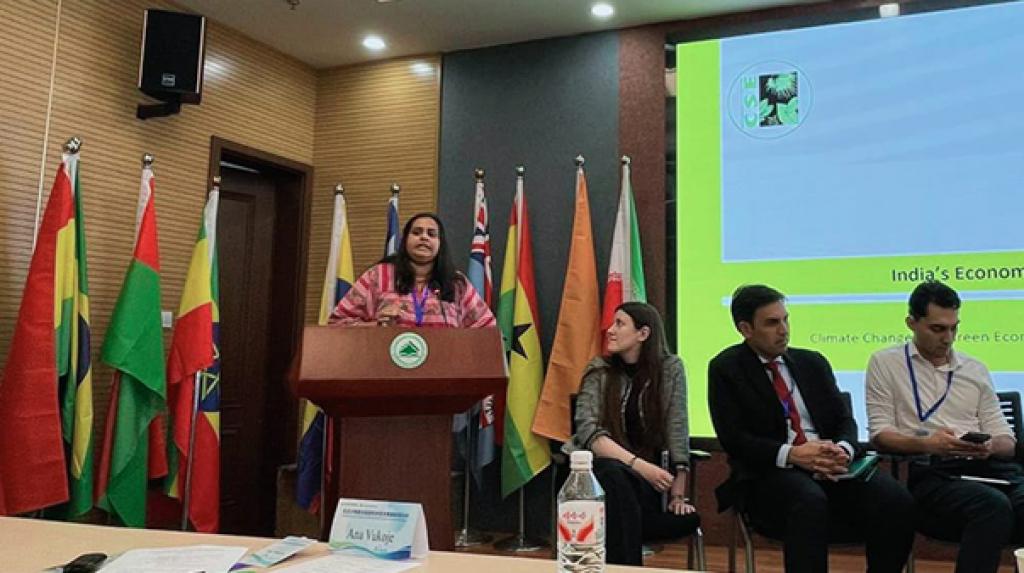
Avantika Goswami, Programme Manager, Climate Change and Green Economy at the Centre for Science and Environment, said the “onus” for providing funds to the FRLD is on developed countries.
“The money pledged [by developed countries] is 11 times more than the claimed money. It is not being honoured. Any support that should come from developing countries should be voluntary. India and China are already providing aid to Nepal.”
She added that for low and middle income countries, every disaster requires rebuilding and recovery, which further strains limited domestic budgets already spread thin across multiple competing objectives. To allocate more to climate adaptation, there is also limited ability to raise taxes on the population.
In a fractured geopolitical landscape and slow multilateral system, some experts see a case for regional mechanisms that can provide faster support.
Mathur has proposed resilience and insurance pools for specific regions in the Global South through established regional country pacts. “Operating as a rapid-payout parametric insurance pool, funds would be released automatically upon satellite detection of threshold climate triggers,” he said.
Asianet News
How Could BRICS' New Climate, Trade And Supply Chain Plans Shape Developing Economies?
India hosted the 18th BRICS Leaders’ Summit in New Delhi on September 12–13, 2026, under the theme “Building for Resilience, Innovation, Cooperation and Sustainability.” The summit took place against a backdrop of climate disasters, conflicts, supply‑chain disruptions and financing gaps affecting emerging markets and developing economies.
Prime Minister Narendra Modi opened the summit by stressing that crises in an interconnected world could no longer be confined to individual regions, and that BRICS had placed greater emphasis on strengthening resilience.
The summit concluded with the adoption of the New Delhi Declaration, which brought together commitments on climate change, trade, sustainable‑development finance, carbon markets and global value chains.
On climate change, BRICS reaffirmed support for multilateralism and the Paris Agreement, while highlighting the disproportionate climate burden on emerging markets and the financing gaps they face, particularly in adaptation.
On trade, the declaration raised concerns over unilateral and protectionist measures, including carbon border adjustment mechanisms, warning that such steps could restrict trade, disrupt supply chains and deepen disparities.
Climate Finance And Adaptation
The declaration focused on scaling up climate and sustainable‑development finance. Discussions examined the role of central banks and regulators in addressing barriers to green finance and making projects more bankable.
The bloc encouraged cooperation among finance ministries and central banks, and called for significant scaling up of international support for adaptation in developing countries. It stressed that adaptation finance should be grant‑based and concessional to avoid worsening vulnerabilities.
Environment ministers also reiterated the need for developed countries to fulfil commitments under the New Collective Quantified Goal and tripling adaptation finance to developing countries by 2035.
BRICS opposed unilateral, punitive and discriminatory measures not aligned with international law. Concerns were raised over carbon border adjustment mechanisms and other restrictive measures, including tariffs introduced under environmental objectives.
The bloc emphasised strengthening the multilateral trading system and making the World Trade Organization more responsive to disruptions and the needs of emerging markets.
According to Trishant Dev of the Centre for Science and Environment, opposition to unilateral climate‑linked trade measures must be seen alongside calls for equitable cooperation between developing countries in higher‑value manufacturing.
Carbon Markets And Adaptation Goals
The declaration supported cooperation in carbon markets, focusing on capacity building and knowledge exchange through the BRICS Carbon Markets Partnership.
It welcomed dialogue on aligning carbon markets with adaptation goals, recognising ecosystems as carbon stocks and sinks that contribute to resilience.
BRICS emphasised the need for broader participation of developing countries in higher‑value segments of global manufacturing. The bloc supported initiatives in trade facilitation, infrastructure, industrial capacities and technology transfer.
The Workplan on BRICS Shared Understanding on Global Value Chains and the GVC Action Plan 2026–2030 were endorsed, with attention to challenges faced by emerging markets in moving up the value chain.
Energy security was linked to resilient value chains, with recognition of fossil fuels’ continued role for emerging economies alongside calls for just and inclusive energy transitions.
Avantika Goswami of the Centre for Science and Environment noted that while a fossil fuel phase‑out is unlikely, BRICS nations are increasingly adopting clean technologies such as solar energy and electric vehicles.
Sanmarg
कोलकाता में ओजोन का अजीब विरोधाभास
विश्व ओजोन दिवस के बीच कोलकाता में ओजोन को लेकर एक दिलचस्प पर्यावरणीय तस्वीर सामने आई है। वायुमंडल की ऊपरी परत में मौजूद सुरक्षात्मक ओजोन परत धीरे-धीरे सुधार की ओर बढ़ रही है, लेकिन जमीन के करीब मौजूद ओजोन यानी ग्राउंड-लेवल ओजोन अब भी शहर की हवा के लिए चिंता का विषय बना हुआ है। विशेषज्ञों के मुताबिक दोनों तरह के ओजोन को अलग-अलग समझना जरूरी है। नएस्थान तलाशें
2026 की गर्मियों में नहीं मिला मानक से अधिक ओजोन
सेंटर फॉर साइंस एंड एनवायरनमेंट (CSE) के विश्लेषण के अनुसार कोलकाता में गर्मियों के दौरान ओजोन की स्थिति में हाल के वर्षों में सुधार दर्ज हुआ है। वर्ष 2021 में राष्ट्रीय आठ घंटे के मानक 100 माइक्रोग्राम प्रति घन मीटर से अधिक ओजोन वाले 46 दिन दर्ज किए गए थे।
2025 में यह संख्या घटकर 22 दिन रह गई और 2026 की गर्मियों में ऐसे एक भी दिन की रिपोर्ट नहीं हुई। हालांकि नवंबर 2025 से जनवरी 2026 के बीच 12 दिन ओजोन का स्तर निर्धारित मानक से ऊपर रहा।
हरियाली वाले इलाकों में भी बढ़ा ओजोन का असर
रिपोर्ट में सामने आया कि कोलकाता के कुछ हरित इलाकों में भी ग्राउंड-लेवल ओजोन का स्तर अधिक पाया गया। मार्च से मई 2025 के दौरान रवींद्र सरोवर में 17 दिन, जादवपुर में पांच दिन, रवींद्र भारती विश्वविद्यालय में तीन दिन और विक्टोरिया मेमोरियल में दो दिन ओजोन मानक से अधिक रहा। इसके विपरीत बालीगंज, विधाननगर और फोर्ट विलियम में ऐसे मामले दर्ज नहीं हुए।
वाहनों और प्रदूषकों की रासायनिक प्रतिक्रिया से बनता है ओजोन
ग्राउंड-लेवल ओजोन सीधे वाहनों या फैक्ट्रियों से उत्सर्जित नहीं होता। नाइट्रोजन ऑक्साइड (NOx), वाष्पशील कार्बनिक यौगिक (VOCs) और अन्य प्रदूषक धूप में रासायनिक प्रतिक्रिया करते हैं, जिससे ओजोन बनता है।
विशेषज्ञों के अनुसार इसका असर सांस की नली और फेफड़ों पर पड़ सकता है तथा बच्चों, बुजुर्गों और पहले से सांस संबंधी बीमारी वाले लोगों के लिए जोखिम बढ़ सकता है।
कोलकाता से सटे हावड़ा में 2025 की गर्मियों के दौरान 92 में से 58 दिन ओजोन मानक से अधिक रहा, जबकि कोलकाता में यह संख्या 22 दिन थी। दासनगर में अकेले 57 दिन ऐसे दर्ज किए गए। CSE ने यह भी स्पष्ट किया है कि हावड़ा में निगरानी केंद्रों के विस्तार ने आंकड़ों के रुझान को प्रभावित किया हो सकता है।
इसलिए 2026 की गर्मियों में कोलकाता में शून्य ओजोन-उल्लंघन राहत देने वाला संकेत जरूर है, लेकिन वैज्ञानिकों को इसमें मौसम, बारिश, बादल, तापमान और वायुमंडलीय रसायन की भूमिका का भी अध्ययन करना होगा।